
Are Glass Partitions a Good Solution for Dividing Office Spaces?
Open-plan office layouts have dominated workplace design for decades, celebrated for encouraging collaboration, communication and flexibility. Yet many businesses have discovered that fully open environments can also lead to excessive noise, a lack of privacy and reduced productivity for tasks that require focus. This tension has driven designers and employers to seek solutions that balance openness with function, and one solution that has risen to prominence is glass partitions.
Glass partitions offer a way to divide space without sacrificing light, visibility or a sense of connectedness. But are they truly a good solution for open-plan offices? In this blog, we explore the advantages and potential limitations of glass partitions to help you decide if they’re the right choice for your workspace.
What Are Glass Partitions?
Glass partitions a re non-load-bearing walls made predominantly of glass panels. They can be framed, semi-framed or frameless, and used to create:
- Meeting rooms
- Private offices
- Quiet zones
- Reception areas
- Collaborative breakout spaces
Unlike traditional solid walls, glass partitions allow visual transparency while still creating defined, functional zones within larger open areas.
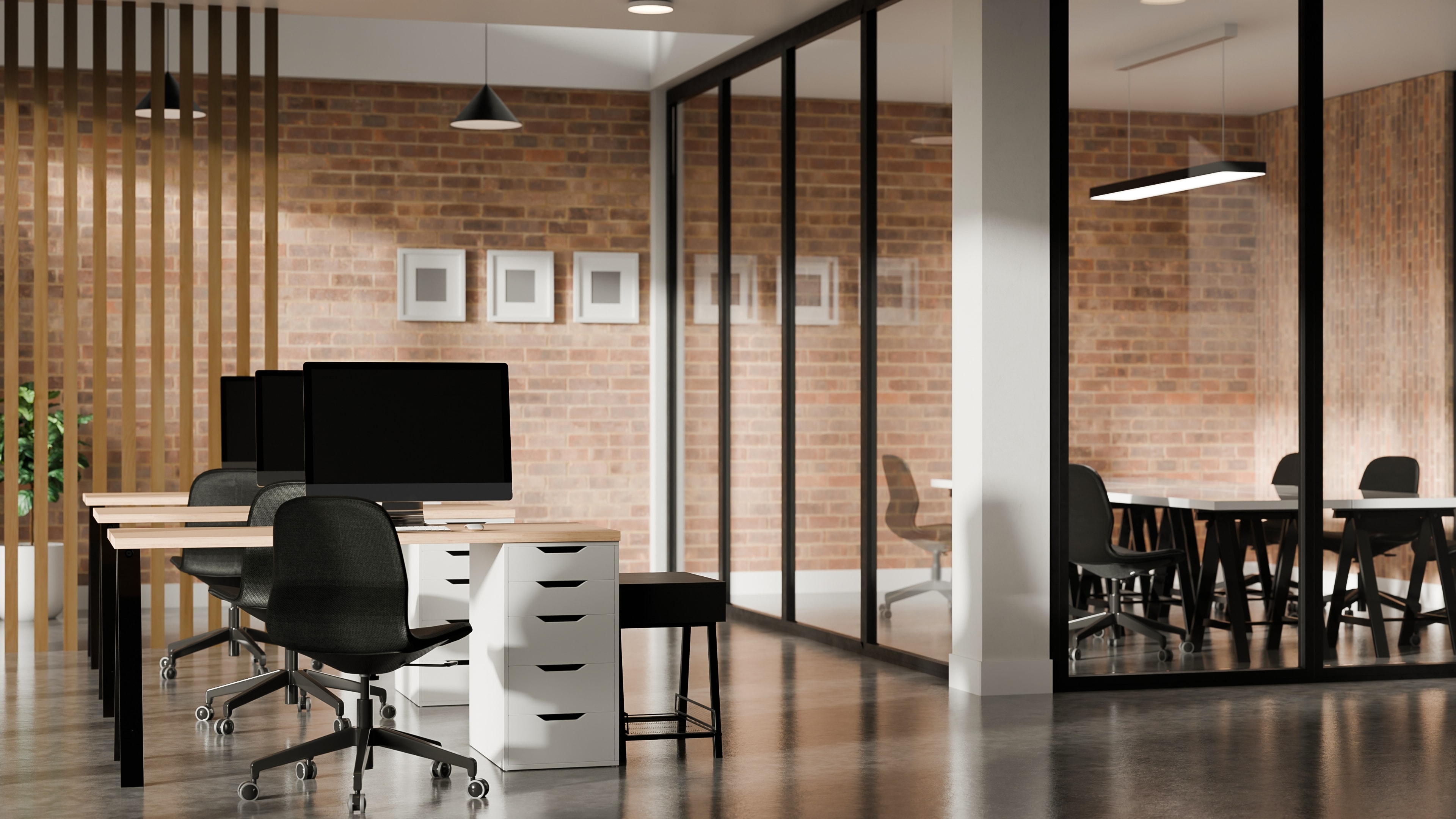
Why Modern Glass Partitions Are Popular in Modern Offices
Modern offices increasingly prioritise both collaboration and flexibility. Glass partitions align well with these priorities because they:
- Preserve natural light flow
- Maintain visual connectivity across teams
- Appear sleek and contemporary
- Offer the ability to reconfigure space without major construction
Instead of isolating teams, glass partitions define space while keeping employees connected, a key psychological benefit that supports a collaborative culture.
The Benefits of Glass Partitions for Open-Plan Offices
1. Maximising Natural Light
One of the strongest advantages of glass partitions is their ability to transmit light. Office spaces divided by opaque walls often suffer from darker interiors that rely more heavily on artificial lighting.
Glass partitions allow natural daylight to travel deep into the floorplate, improving ambience and reducing reliance on electric lighting. This not only enhances comfort but can help reduce energy costs over time.
2. Visual Connectivity with Defined Zones
Glass partitions strike a balance between privacy and openness. By visually connecting spaces:
- Teams maintain awareness of one another
- Lines of sight aren’t blocked
- Collaborative culture is supported
At the same time, designated spaces are created where teams can hold meetings, focus on concentrated work or speak privately without disturbing others.
3. Improved Acoustics (When Specified Correctly)
While open plan offices are notorious for noise distractions, glass partitions with the right acoustical design can significantly reduce sound transmission. Options include:
- Laminated acoustic glass
- Double-glazed partition systems
- Seals and edge treatments to reduce sound leaks
This helps create quieter work zones while retaining openness elsewhere.
4. Modular and Flexible Design
Unlike traditional brick or stud walls, glass partitions are often easier to install, relocate or reconfigure. Many systems are modular, allowing companies to:
- Expand meeting rooms
- Reallocate team zones
- Adjust layouts in response to organisational changes
This adaptability is particularly valuable in fast-moving businesses or shared workspaces.
5. Aesthetic Appeal and Brand Image
Glass partitions convey a sense of modernity and professionalism. They can be:
- Fully clear
- Frosted or branded
- Printed with company imagery or patterns
This versatility allows offices to match partitions with brand identity or privacy requirements while maintaining a cohesive design language.
Potential Drawbacks of Office Glass Partitions
While the benefits are substantial, there are also considerations to keep in mind.
1. Reduced Acoustic Privacy Without Appropriate Specification
Not all glass partitions are created equal in terms of acoustics. Standard single-pane glass can reflect sound, leading to:
- Echo
- Reduced speech privacy
- Distraction
To address this, partitions need to be specified with acoustic performance in mind – typically through double glazing, acoustic seals and laminated glass designed to absorb or block sound. While effective, these options can add cost.
2. Cost Considerations
Glass partition systems are often more expensive than simple stud walls, particularly when:
- Acoustic performance is required
- Frameless systems are chosen
- Custom graphics or branding are applied
However, it’s important to weigh the upfront cost against long-term value: improved light, greater flexibility and enhanced employee experience can deliver returns that traditional partitions don’t.
3. Cleaning and Maintenance
Glass surfaces show fingerprints, smudges and dust more readily than solid walls, which means they may require:
- Regular cleaning schedules
- Quality cleaning products
- Clear expectations around maintenance
The need for repeat cleaning is something many offices choose to accept in exchange for enhanced light and openness.
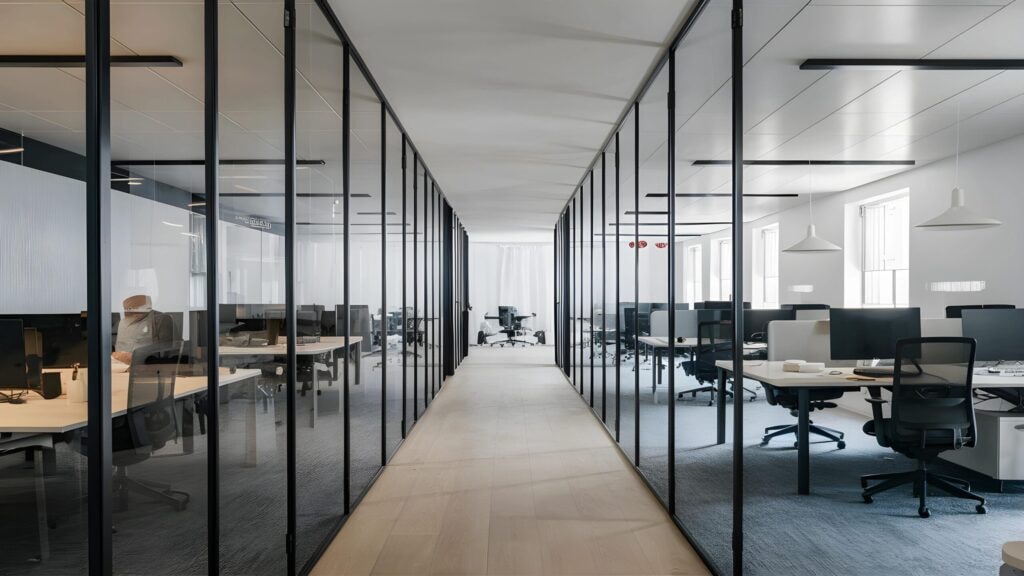
Key Design Considerations When Choosing Glass Office Partitions
Successful implementation of glass partitions requires attention to detail:
Office Acoustic Performance
Understanding the required sound ratings (e.g., dB reduction) for specific spaces (meeting rooms vs quiet areas) helps determine:
- Glass thickness
- Type of glazing (single vs double)
- Seals and framing systems
Height and Layout
Full-height partitions provide maximum sound separation and visual continuity, while partial-height options can reduce cost and maintain airflow.
Careful planning around circulation paths, access points and sightlines ensures that partitions support, rather than disrupt, workflow.
Safety and Compliance
Glass partitions must meet relevant safety standards, which may include:
- Toughened or laminated glass
- Safety films
- Edge protection
Ensuring compliance protects both occupants and the business.
When Glass Partitions Are the Right Solution
Glass partitions tend to excel in these scenarios:
- Offices that need defined meeting or break-out zones
- Workspaces that prioritise natural light
- Businesses seeking a modern aesthetic
- Flexible offices that may reconfigure layouts
They’re especially effective in creative spaces, collaborative hubs and client-facing areas where sightlines and branding are priorities.
When to Explore Other Options
Glass partitions might not be ideal if:
- Maximum acoustic privacy is essential (e.g., confidential work)
- Budget constraints limit materials options
- Maintenance resources are limited
In these cases, solid partitions with acoustic treatments or hybrid systems (partial walls + glass) may provide a better balance.
Final Thoughts
Glass partitions offer a flexible, light-enhancing, visually open solution to dividing open-plan office spaces. When specified with acoustic performance, thoughtful layout planning and appropriate finishes, they can improve collaboration, privacy and aesthetics without sacrificing natural light or connectivity.
While they may require a higher initial investment and ongoing maintenance compared to traditional partitions, the long-term benefits – including workplace satisfaction, adaptability and design impact – make them a compelling choice for many modern offices.
If your organisation values both openness and defined workspace zones, glass partitions are well worth considering as part of a smart office design strategy.
At UKO Glass, we provide high-quality glass partitions that combine style, functionality, and durability. Whether you’re looking to create collaborative zones, private offices, or visually open spaces, our team can help you find the perfect solution. Get in touch today on 01422 861116 to discuss your next project.
Pingback: Top 8 Office Trends - UKO Glass