
How Does a Glass Cutting Machine Work?
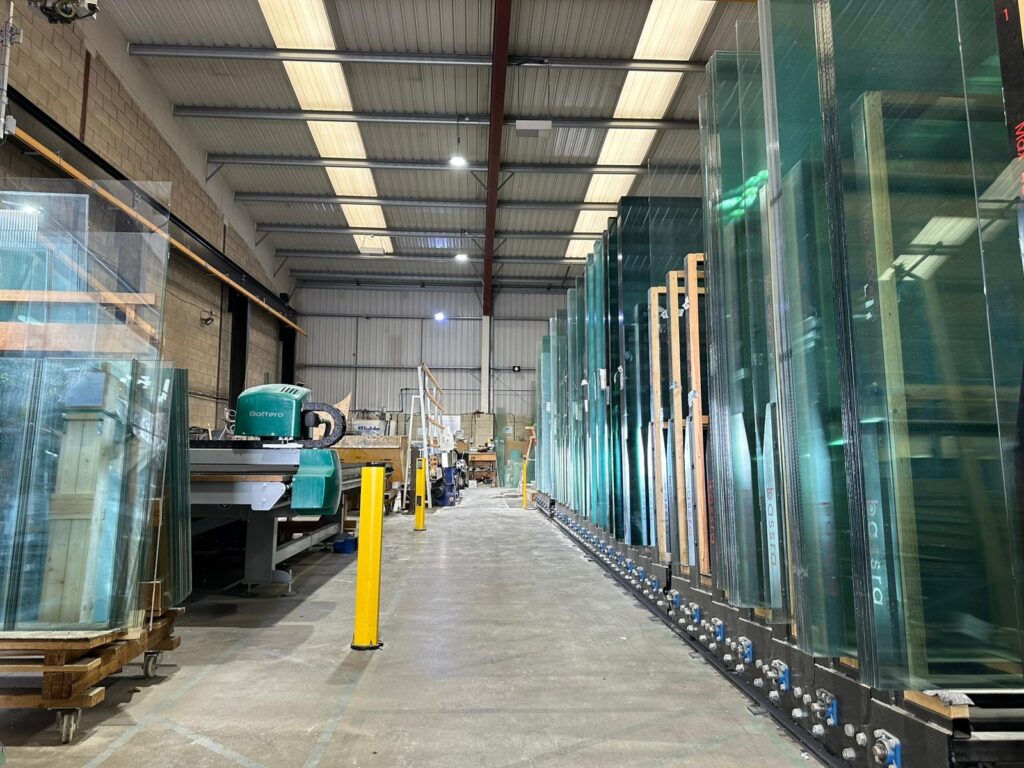
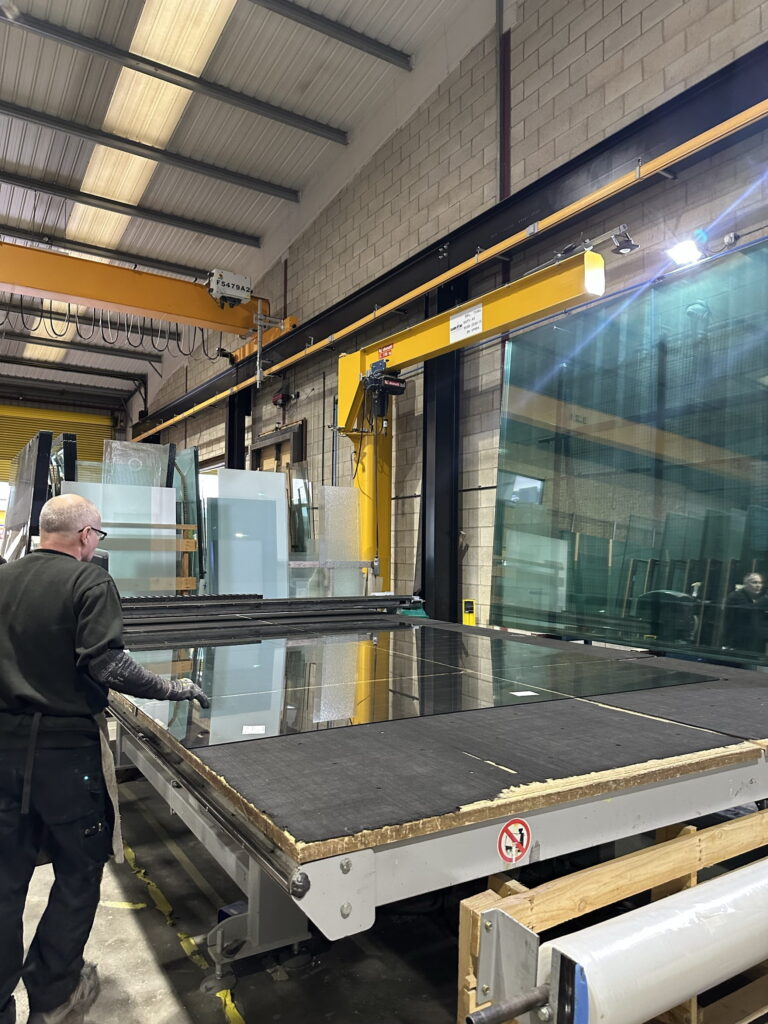
How Does a Glass Cutting Machine Work? For many glass manufacturers, automated cutting tables play an important role in producing accurate panes efficiently and consistently. They allow large sheets of glass to be processed into the specific sizes and shapes required for windows, doors, insulated glass units and specialist glazing applications. Here at UKO Glass, we use advanced machinery, such as the Bottero 353 BKM and Bottero 548 LAM glass cutting systems, to help us manufacture glass to the exact requirements of each project. But how does a glass cutting table actually work? Let’s take a closer look. What Does a Glass Cutting Table Do? A glass cutting machine is designed to score large sheets of glass accurately before the glass is separated along those scored lines. Unlike cutting materials such as wood or metal with a traditional blade, glass is not usually cut all the way through. Instead, a small cutting wheel creates a controlled score on the surface of the glass. This score creates a line of weakness. The glass can then be broken along that line using controlled pressure, creating the required pane. Modern automated cutting tables use computer-controlled movements and software to determine where and how the glass should be cut. This allows manufacturers to process large sheets quickly while maintaining a high level of accuracy. Step 1: The Glass Sheet Is Loaded The process starts with a stock sheet of glass being loaded onto the cutting table. The Bottero cutting system has an air cushion available to help move sheets across the working surface. The air cushion is particularly useful because it reduces friction between the glass and the table, allowing large sheets to be moved more easily while helping to minimise unnecessary contact with the glass. Step 2: The Cutting Plan Is Created Before the machine starts cutting, the required glass sizes need to be programmed into the system. This is where software becomes an important part of the process. For example, a large sheet might need to be divided into several different panes for a number of windows. Instead of simply cutting the pieces in whatever order they are entered, optimisation software can work out an efficient cutting pattern. The aim is to make the best possible use of the original sheet and reduce waste. Step 3: The Machine Detects the Glass One of the advantages of modern automated cutting equipment is that the machine can use information about the glass itself when determining how it should be processed. Bottero systems can automatically measure glass thickness using a linear encoder. The machine can then use this information to load the appropriate cutting parameters. Different types and thicknesses of glass require different cutting conditions. The pressure used to score the glass needs to be controlled carefully. Too much pressure could create an unnecessarily deep score, while insufficient pressure could result in an inconsistent score that does not break cleanly. By automatically adjusting the cutting parameters according to the glass being processed, the machine can maintain greater consistency across production. Step 4: The Cutting Head Scores the Glass A cutting head then travels across the sheet following the programmed cutting pattern. Rather than using a conventional saw blade, the cutting head uses a small cutting wheel to score the glass. The machine carefully controls the movement and pressure of the cutting head as it follows the required dimensions. Step 5: The Glass Is Broken Along the Score Scoring the glass is only part of the process. Once the required lines have been created, the glass needs to be separated. The operator then applies controlled pressure to the scored areas, allowing the glass to break along the intended lines. This is known as breakout. The objective is to create clean, accurately sized pieces without putting unnecessary stress on the glass. Why Is Precision So Important? Glass might look simple, but achieving consistent dimensions is critical when it is being manufactured for use in windows, doors and insulated glass units. A pane that is even slightly different from the required specification could create problems later in the manufacturing process. Accurate cutting therefore provides an important foundation for everything that follows. Of course, machinery is only one part of achieving a quality finished product. Skilled operators, appropriate quality control and careful handling remain essential throughout the manufacturing process. Can Glass Cutting Machines Cut Different Shapes? The glass cutting table uses CNC technology enabling it to cut both standard and complex shaped glass pieces. Operators can select from a library of pre-programmed shapes or import custom DXF files directly into the system, allowing bespoke designs to be produced with precision and repeatability. The CNC-controlled cutting process ensures accuracy and efficiency on a usually labour-intensive process, along with consistent quality across both one-offs and multiple high volume orders. Does Automation Make Glass Cutting Faster? One of the biggest benefits of automated glass cutting is efficiency. However, automation can also reduce unnecessary manual handling. That does not mean people are removed from the process. Instead, skilled operators oversee the machinery, monitor production and ensure the finished glass meets the required specification. The technology effectively gives operators greater control over a more efficient manufacturing process. Specialist Glass Manufacturing From UKO Glass At UKO Glass, we manufacture a wide range of specialist glass products in our West Yorkshire facility, using advanced machinery alongside the experience of our skilled team. If you’re looking for specialist glass, get in touch with our team today on 01422 861116 to discuss your requirements and find out how we can help.
How Does a Glass Cutting Machine Work? Read More »